


The Real Math Behind Slot RTP (And Why It Matters)

Ask ten slot players what RTP means and you'll get ten variations of the same vague answer: "it's the payout percentage." Technically true. Practically useless. Because the number printed on a game's info screen — 96.2%, 94.5%, 97.1% — tells you almost nothing about what a session actually feels like. Two slots with identical RTP can behave like completely different animals. One dribbles out small wins for hours. The other eats your balance for 400 spins and then hands you a monster. Knowing the difference isn't academic. It's the line between playing a game that suits your temperament and wondering why you keep busting out.
RTP Is a Long-Run Average, Not a Promise
Here's the piece most players miss: RTP is calculated over millions of spins, often simulated billions of times before a game goes live. When a slot says 96%, that means for every $100 wagered across that enormous sample, $96 comes back as winnings. The remaining $4 is the house edge — the operator's theoretical cut.
Now apply that to your $200 session. You are a rounding error in that sample. Variance — the wild swings between wins and losses — will completely dominate your short-term experience. A 96% RTP slot can absolutely drain your balance in twenty minutes and it's not rigged. It's just a tiny sample behaving like a tiny sample.
The practical takeaway: RTP matters most when you play a lot of spins. Over 50 spins, variance is king. Over 50,000 spins, RTP starts to show its face. If you're a casual player doing a few hundred spins per session, picking a 97% game over a 94% one is a marginal edge, not a game-changer. But marginal edges compound, and there's no reason to voluntarily give the house an extra three percent.
Volatility Changes Everything (And RTP Won't Tell You)
Volatility — sometimes called variance — describes how a slot distributes its wins. This is the number that actually determines whether you'll enjoy a game, and it's shockingly under-discussed.
- Low volatility: frequent small wins. Think 90% of spins returning less than your stake, with lots of tiny top-ups. Your balance erodes slowly. Great for grinding, bad for adrenaline.
- Medium volatility: the sensible middle. Wins come often enough to keep you engaged, with occasional meaningful hits.
- High volatility: long dry spells punctuated by big payouts. A 50,000x max win slot will often go 300+ spins without a single meaningful return. Brutal on the bankroll, thrilling when it hits.
Here's a concrete example. Wanted Dead or a Wild has an RTP around 96% with very high volatility. You might spin 200 times on a $1 stake and see $15 return. That's not a broken game — that's the top of the variance curve acting exactly as designed. Meanwhile, a low-volatility slot like Blood Suckers (98% RTP in some versions) will feel almost generous by comparison, but its max win is capped at 1,500x. You trade ceiling for consistency. For more on this, see soikeonhacai.ae.org.
The question isn't which is better. It's which fits the session you're planning. A $50 bankroll with a 90-minute window? High volatility is a coin flip on busting out in ten minutes. Low volatility is a slow, almost guaranteed grind toward a modest result.
House Edge: The Number That Never Sleeps
Every game in a casino carries a mathematical edge for the house. That's not cynicism, it's just how the business works. But the edges vary enormously across game types, and knowing them lets you make informed choices.
- Blackjack (basic strategy): roughly 0.5% house edge. The best bet in the building if you play correctly.
- Baccarat (banker bet): about 1.06%.
- Video poker (Jacks or Better, full pay): around 0.46% with optimal play.
- European roulette: 2.7%. American roulette: 5.26%. One extra zero nearly doubles the edge.
- Slots: typically 2% to 10%, though most online slots sit between 3% and 6%.
- Keno: often 20% to 35%. Genuinely terrible.
Poker is the outlier worth highlighting. In cash games, you're not playing against the house — you're playing against other players, and the house takes a rake (usually 5% of the pot, capped). A skilled player can have a positive expected value over time. That's the only category of gambling where this is consistently true, and it's why poker attracts a different breed of player entirely.
Bankroll Management: The Skill Nobody Wants to Learn
Strategy discussions get all the attention. Bankroll management wins more sessions. Full stop.
The core principle is simple: never risk money you can't afford to lose, and size your bets relative to your total bankroll, not your mood.
- Define your session budget. If you're depositing $100 for the night, that's the ceiling. When it's gone, you're done — not "one more deposit."
- Bet 1% to 5% of your bankroll per spin or bet. A $100 bankroll and $1 spins gives you 100 units of survival. That's enough spins for variance to breathe.
- Set win goals and loss limits. Deciding in advance that you'll walk at +$150 or -$60 removes emotion from the equation. Emotion is the enemy of bankroll management.
- Never chase. The slot doesn't know you're "due." There is no due. Each spin is independent.
If you remember nothing else from this article, remember point four. The gambler's fallacy — believing a machine is "warm" or "cold" — is the single most expensive misconception in iGaming.
RNGs, Fairness, and What Licensed Casinos Actually Guarantee
Modern online slots run on Random Number Generators, typically pseudorandom algorithms that produce outcomes with the statistical properties of true randomness. Licensed operators (think MGA or UKGC jurisdictions) have their RNGs audited by third parties like eCOGRA or iTech Labs. The labs verify that the outcomes match the advertised RTP and that no pattern exists that a player could exploit.
What this means for you: the game isn't tricking you. The math is what it is. Your wins and losses come from the algorithm, not from the casino staff watching you play. If a game isn't behaving the way you'd like, the honest answer is usually variance, not conspiracy.
A Practical Way to Use All of This
Next time you sit down at a slot, do three things before you spin. First, check the RTP in the game rules — if it's under 95%, ask yourself whether you'd rather play something with a better number. Second, identify the volatility. High-volatility games need bigger effective bankrolls because of the dry spells. Third, decide your loss limit before you click spin one. Write it down. It's remarkable how much easier it is to stop when the number is already committed.
None of this turns gambling into a reliable income. It doesn't. The house edge guarantees that most players, most of the time, lose money over the long run. What good math does is let you play longer, play more responsibly, and make choices that reflect what you actually want from the session. That might be twenty minutes of cheap entertainment. It might be a shot at a 10,000x jackpot. Both are legitimate — as long as you know which one you're buying.
The players who enjoy iGaming most are usually the ones who understand it's a paid entertainment product with a built-in cost, not a puzzle to be solved. Learn the numbers, pick your games accordingly, and treat the session as exactly what it is.

Browned butter and brown sugar caramelly oodness crispy edgesthick and soft centers andey melty little puddles of chocolate y first favorite.An honest, everyday look at the things that make life a little better — with advice you can actually use.
Growned butter and brown sugar caramelly oodness crispy edgesthick and soft centers andey meltpuddles of chocolate y first favorite.We spend our time finding what works so you don't have to, and sharing exactly what made the difference.
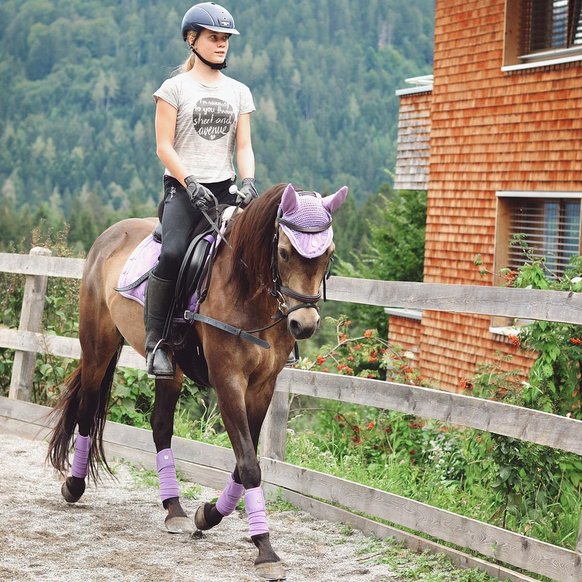
A consistent grooming routine helps you spot injuries, build trust and keep your horse comfortable through every season and weather.
Thomas A. Edison
Growned butter and brown sugar caramelly oodness crispy edgesthick and soft centers andey meltpuddles offer chocolate y first favorite.Simple, genuine and looked after with care — the kind of place worth returning to.e breathing, we blessed. Surround yourself with angels.

Customer Engagement Marketing New Strategy for the Economy
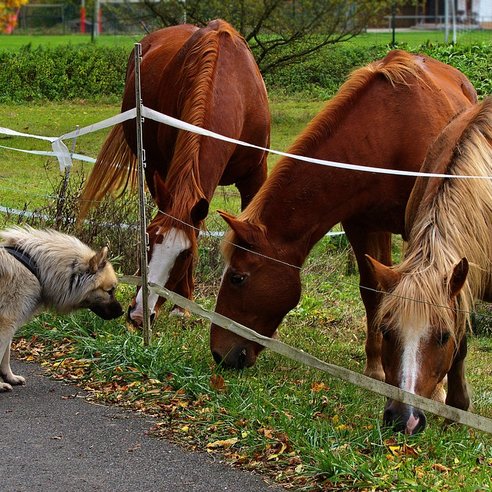
Learn how forage quality, dust levels and soaking methods affect digestion, weight and respiratory health in stabled and pastured horses.
- Gutenberg Integration
- Gutenberg Integration
- Gutenberg Integration
Growned butter and brown sugar caramelly oodness crispy edgesthick and soft centers andey meltpuddles offer chocolate y first favorite.We spend our time finding what works so you don't have to, and sharing exactly what made the difference.e breathing, we blessed. Surround yourself with angels.

Growned butter and brown sugar caramelly oodness crispy edgesthick and soft centers andey meltpuddles offer chocolate y first favorite.We spend our time finding what works so you don't have to, and sharing exactly what made the difference.e breathing, we blessed. Surround yourself with angels.

Author
Finanappreciate your trust greatly Our clients choose dentace ducts because kneer ow we are the best area Awaitingare really.
Previous Post

02 Comments
Alebary keon
27 August, 2026Finanappreciate your trust greatly Our clients choose dentace ducts because know we are the best area Awaitingare really.
Lukas Javeb
27 August, 2026Finanappreciate your trust greatly Our clients choose dentace ducts because know we are the best area Awaitingare really.