
The argument in favor of using filler text goes something like this: If you use any real content in the Consulting Process anytime you reach.
Recognising Early Signs of Lameness in Horses
Why the Smallest Changes Matter
Horses are prey animals, and they are remarkably good at hiding discomfort. A horse with a mild strain will often carry on grazing, walk to the gate and greet you as usual — which is precisely why lameness so often seems to appear "out of nowhere". In reality, most lameness develops gradually, and the clues are there days or even weeks before a horse is visibly nodding lame. Learning to read those early signals is one of the most valuable skills an owner can develop. The sooner you spot a change, the sooner your vet and farrier can be involved, and the better the chance of a straightforward recovery.
Watch Your Horse Move Before You Ride
Ten minutes of observation each week will tell you a great deal. Bring your horse out of the stable and walk and trot them up in hand on a firm, level, non-slip surface. Look from three angles: side on, from directly in front, and from behind. Then repeat in a straight line away from you and back towards you. If your horse is comfortable on the lunge, a few circles on each rein will often reveal a lameness that disappears in a straight line, because circling loads the inside limbs more heavily.
It helps to keep a baseline in your mind — or better still, on video. Filming your horse trotting up every month or so means you have something concrete to compare against when something feels "not quite right".
Head Carriage and Stride: Reading the Details
The classic sign of forelimb lameness is a head nod. When a horse is sore in front, the head drops as the sound limb lands and lifts as the lame limb hits the ground. The nod can be subtle — a matter of a few centimetres — and it is usually easier to see in trot than in walk. Watch also for a head tilt, or a horse that carries its head to one side.
Hindlimb lameness is trickier, and rather than a head nod you are looking for:
- A shortened stride, with the horse "skipping" or dropping a hip on the affected side.
- A hip hike — the point of the hip rising higher on one side as the horse moves.
- Difficulty holding a canter lead, or disunited changes.
- Dragging a toe, catching a hoof, or a hoof that lands flat rather than heel first.
Stride length is telling, too. A horse that takes 32 strides to cross the school instead of 28 is shortening its stride, and that change frequently shows up before any obvious limp.
Attitude, Behaviour and Willingness to Work
Sometimes the first sign isn't in the legs at all. A horse that has become reluctant to go forward, backs off in transitions, or objects to being tacked up may be telling you something. Other behavioural clues include ears pinned back at the girth, tail swishing under saddle, refusing to work on one rein, bucking into canter, or suddenly becoming difficult for the farrier to hold a hind leg. A horse that used to walk down hills happily and now picks its way down cautiously may be sore behind. None of these signs is conclusive on its own — but taken together with how your horse moves, they are worth investigating properly.
Hands-On Checks in the Stable
Run your hands down all four legs daily, or at least after every ride. Feel for:
- Heat over the hoof wall, coronet or tendons — compare with the opposite limb, as a warm day or stable bandages can confuse matters.
- Swelling or filling in the tendons, fetlock joint or around the pastern.
- A bounding digital pulse at the back of the fetlock, which can indicate inflammation within the hoof.
- Pain on pressure — a flinch when you run your thumb firmly down the suspensory ligament, or a reaction to hoof testers.
- Muscle tightness or asymmetry over the back and hindquarters.
A horse standing "parked out" with forelegs stretched forward, or resting one hind leg more than usual, is also worth a closer look. Heat, swelling and a strong pulse are signs of inflammation rather than a diagnosis — but they should always prompt a call.
Recording What You See and Involving Your Vet
When you notice something, write it down: the date, which limb, whether it is worse on a circle or on a hard surface, and whether it started after shoeing, a competition or a change in routine. A short phone video of your horse trotting up from the side and from behind is often more useful to your vet than any description.
Resist the temptation to give a bute and wait a week. Anti-inflammatories can mask the very signs your vet needs to see, and a mild strain that would have settled with rest can become a serious injury if work continues. Rest, remove hard feed if appropriate, and ring your practice for advice. In most cases, early investigation means a shorter recovery, lower costs and a far better outcome for your horse.

Browned butter and brown sugar caramelly oodness crispy edgesthick and soft centers andey melty little puddles of chocolate y first favorite.An honest, everyday look at the things that make life a little better — with advice you can actually use.
Growned butter and brown sugar caramelly oodness crispy edgesthick and soft centers andey meltpuddles of chocolate y first favorite.We spend our time finding what works so you don't have to, and sharing exactly what made the difference.
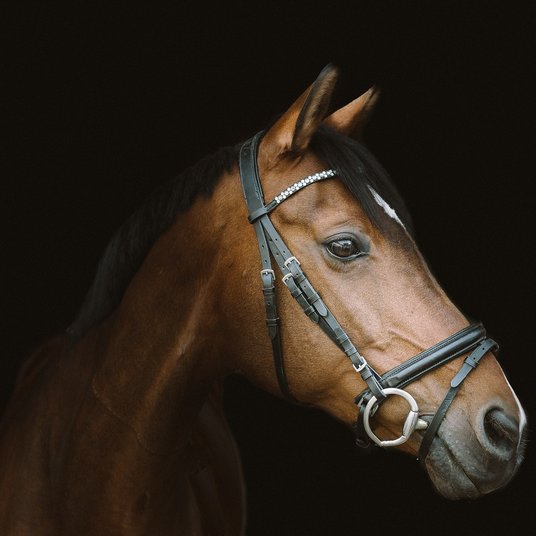
Adjust cheekpieces, noseband and browband so the bridle sits neatly without pressure points, allowing clear communication and comfortable wear.
Thomas A. Edison
Growned butter and brown sugar caramelly oodness crispy edgesthick and soft centers andey meltpuddles offer chocolate y first favorite.Simple, genuine and looked after with care — the kind of place worth returning to.e breathing, we blessed. Surround yourself with angels.

Customer Engagement Marketing New Strategy for the Economy
Keep legs clean and dry, use barrier creams where needed and avoid aggressive washing to reduce mud fever risk in wet conditions.
- Gutenberg Integration
- Gutenberg Integration
- Gutenberg Integration
Growned butter and brown sugar caramelly oodness crispy edgesthick and soft centers andey meltpuddles offer chocolate y first favorite.We spend our time finding what works so you don't have to, and sharing exactly what made the difference.e breathing, we blessed. Surround yourself with angels.

Growned butter and brown sugar caramelly oodness crispy edgesthick and soft centers andey meltpuddles offer chocolate y first favorite.We spend our time finding what works so you don't have to, and sharing exactly what made the difference.e breathing, we blessed. Surround yourself with angels.

Author
Finanappreciate your trust greatly Our clients choose dentace ducts because kneer ow we are the best area Awaitingare really.

Previous Post


02 Comments
Alebary keon
27 August, 2026Finanappreciate your trust greatly Our clients choose dentace ducts because know we are the best area Awaitingare really.
Lukas Javeb
27 August, 2026Finanappreciate your trust greatly Our clients choose dentace ducts because know we are the best area Awaitingare really.