
The argument in favor of using filler text goes something like this: If you use any real content in the Consulting Process anytime you reach.



How to Fit a Bridle Correctly and Comfortably
Fit from the top down
A bridle that fits well is one you barely notice. It sits quietly on the head, leaves no marks, and lets your aids travel down the reins without the horse needing to brace against pressure. A bridle that pinches, pulls or presses just slightly in the wrong place will show up as head shaking, a hollow jaw, fussy mouthing or a horse that leans on one rein. The good news is that almost every one of these problems can be solved with twenty minutes, a tape measure and a bit of patience.
Always start with the bridle completely loosened off on the horse's head. Take everything apart, check the leather for wear at the buckles, and then build the fit from the top down: headpiece first, then browband, cheekpieces and finally the noseband. Working in that order means each strap is adjusted in relation to the one above it, rather than fighting the strap below.
Headpiece and browband
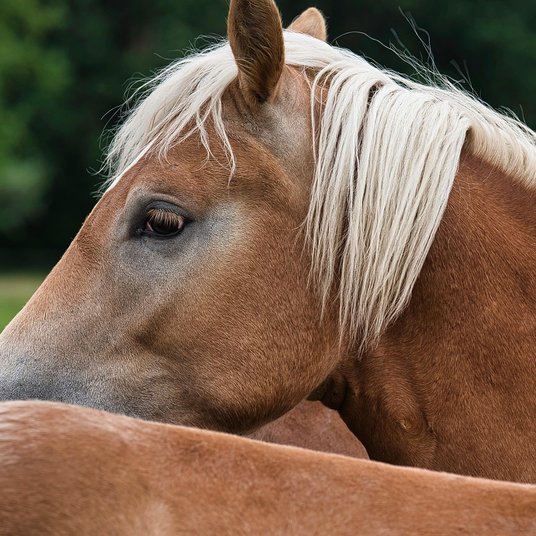
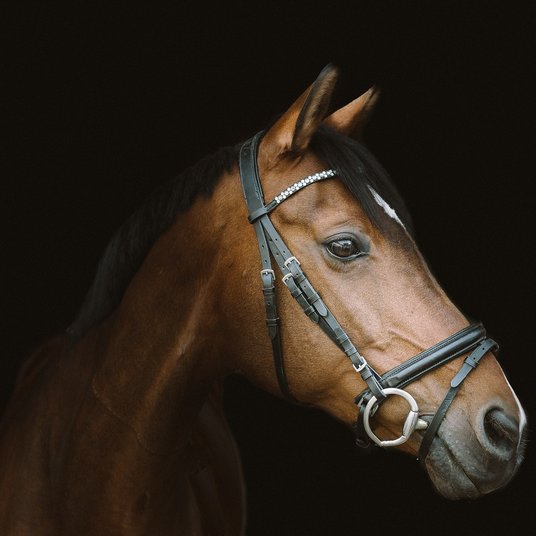
The headpiece sits on the poll, the flat area behind the ears and between the cheekbones. It should sit snugly and evenly, with enough clearance behind the ears that you can slip a finger between the headpiece and the base of each ear without lifting the whole bridle. If it's pushed forward, it will rub the ears; if it's too far back, it will press on the first vertebra of the neck and your horse will tell you about it by throwing the head up.
- Run a finger under the headpiece on both sides — the pressure should be even, with no hard edge digging in.
- The browband sits below the ears and in front of the headpiece, roughly horizontal. You should fit one to two fingers between it and the forehead.
- Check the browband isn't twisted and isn't sitting on the base of the ears. A browband that's too short will pull the headpiece forward and the cheekpieces into the cheekbones.
- If your horse has a wide forehead or a thick mane, choose a browband with a generous curve rather than a straight one.
Cheekpieces and bit height
With the headpiece and browband settled, adjust the cheekpieces evenly on both sides. The bit should sit level in the mouth, resting in the gap between the incisors and the molars, with the corners of the mouth showing one or two soft creases for most snaffles. If there are no creases at all, the bit is hanging too low and may knock against the teeth; if you can see three or four deep wrinkles, it is far too high and will cause constant pressure on the corners of the mouth.
- Loosen the cheekpiece buckles, slide the bit to the correct height, then fasten them a hole at a time on each side so the bit stays level.
- Stand in front of the horse and check that both cheekpieces run in a straight line from headpiece to bit ring, without bulging around the cheekbones.
- If the cheekpieces sit against the cheekbones no matter what you do, the browband is likely too small or the headpiece is too far forward.
The noseband: the most commonly over-tightened strap
A cavesson should sit roughly two fingers' width below the cheekbone, resting on the flat of the nasal bone. You should be able to slide two fingers under the front of it and one finger under the side. That is a surprisingly generous amount of room, and it is deliberate: a noseband tight enough to leave a groove restricts the horse's ability to swallow, breathe and relax the jaw.
- Flash strap: the padded strap sits in the chin groove, with a finger's width of clearance. It should never pull the nose inwards or drag the lower jaw towards the chest.
- Grackle: the crossed straps sit above the bit and below the cheekbones, with the central disc in the middle of the nose. The chin strap should be snug but allow a finger underneath.
- Drop noseband: positioned about two fingers above the nostrils, with the strap resting in the chin groove — never so low that it interferes with breathing.
Pressure points and the riding check
Once everything is buckled, do a slow, methodical walk around the horse's head. Look for any metal sitting against bone, any strap that has slipped out of its keep, and any buckle pressing directly onto the skin. If the bridle has a throatlash, it should be loose enough to fit four fingers between it and the cheek — its job is to stop the bridle coming off, not to hold the head in position.
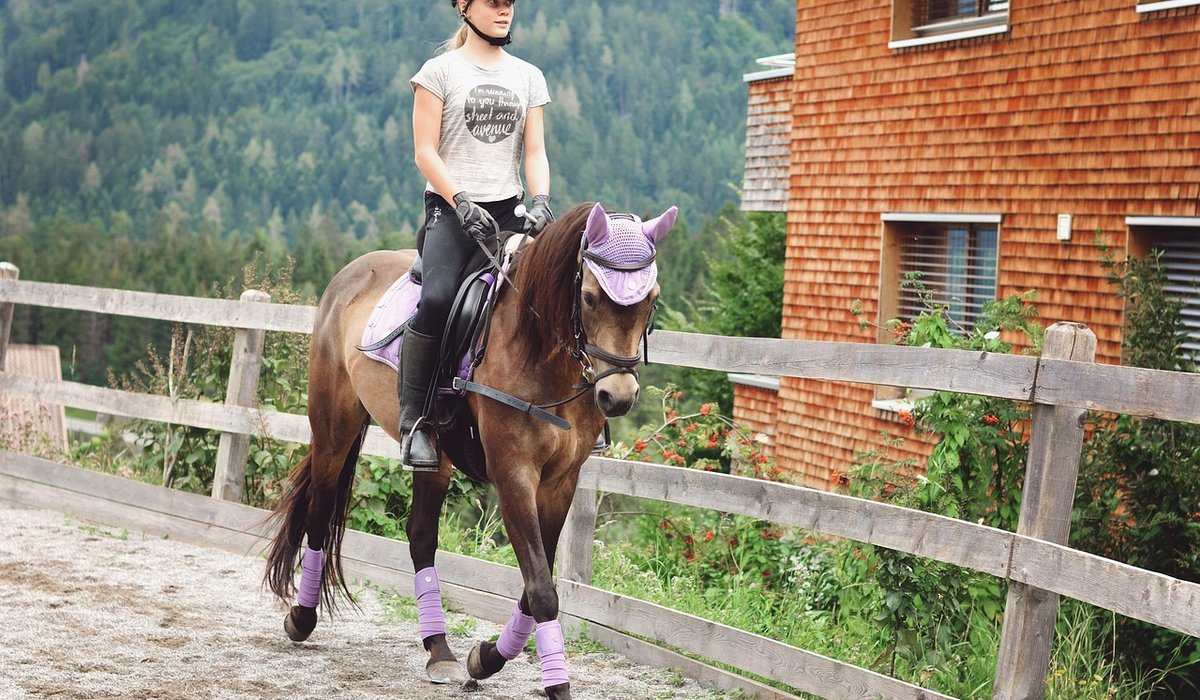
Check that both sides are buckled on the same hole, that the bit is level, and that the reins are the same length. Then ride for ten to fifteen minutes and check again. Good leather softens and settles with warmth and sweat, so a bridle that was perfect in the stable may drop a hole or two once you're working. Look for rub marks, patchy sweat patterns or missing hair behind the ears, under the browband and at the corners of the mouth.
Finally, remember that fit changes with the seasons. A clipped horse, a thinner summer coat or a new winter mane can all alter how the bridle sits. Re-check the whole thing every few weeks, and after cleaning, treat the leather so it stays supple rather than drying into stiff edges that rub. A bridle that fits properly is not a luxury — it is the foundation of every quiet, clear conversation you have with your horse.

Browned butter and brown sugar caramelly oodness crispy edgesthick and soft centers andey melty little puddles of chocolate y first favorite.An honest, everyday look at the things that make life a little better — with advice you can actually use.
Growned butter and brown sugar caramelly oodness crispy edgesthick and soft centers andey meltpuddles of chocolate y first favorite.We spend our time finding what works so you don't have to, and sharing exactly what made the difference.
Keep legs clean and dry, use barrier creams where needed and avoid aggressive washing to reduce mud fever risk in wet conditions.
Thomas A. Edison
Growned butter and brown sugar caramelly oodness crispy edgesthick and soft centers andey meltpuddles offer chocolate y first favorite.Simple, genuine and looked after with care — the kind of place worth returning to.e breathing, we blessed. Surround yourself with angels.

Customer Engagement Marketing New Strategy for the Economy
Stock bandages, antiseptic, poultice materials and thermometer in a clean box, then check expiry dates regularly for emergency readiness.
- Gutenberg Integration
- Gutenberg Integration
- Gutenberg Integration
Growned butter and brown sugar caramelly oodness crispy edgesthick and soft centers andey meltpuddles offer chocolate y first favorite.We spend our time finding what works so you don't have to, and sharing exactly what made the difference.e breathing, we blessed. Surround yourself with angels.

Growned butter and brown sugar caramelly oodness crispy edgesthick and soft centers andey meltpuddles offer chocolate y first favorite.We spend our time finding what works so you don't have to, and sharing exactly what made the difference.e breathing, we blessed. Surround yourself with angels.

Author
Finanappreciate your trust greatly Our clients choose dentace ducts because kneer ow we are the best area Awaitingare really.

Previous Post

Next Post

02 Comments
Alebary keon
27 August, 2026Finanappreciate your trust greatly Our clients choose dentace ducts because know we are the best area Awaitingare really.
Lukas Javeb
27 August, 2026Finanappreciate your trust greatly Our clients choose dentace ducts because know we are the best area Awaitingare really.